Showing posts with label kinder. Show all posts

Monday, November 26, 2012

Places to PLAY!

During our first semester this school year, Kindergarten through Second Grade excitedly explored the possibilities of paper sculpture as they constructed these whimsical structures, inspired by playgrounds, theme parks, and other fun places to play!
We began this unit by discussing the difference between 2-dimensional (2D) art and 3-dimensional (3D) art.  Due to space limitations, we did not have the opportunity to do much of anything sculptural last year, so this was a very exciting topic for my students!  We talked about all different kinds of sculptures (and the materials used to make them) and looked for examples in the classroom.
In the weeks before to this unit, students had been exploring line in different ways through drawing and painting (click here to see an example of some of the ways we have done this in the past.)  Students were introduced to some starting-point ideas for how to manipulate the flat paper strips to transform them into three-dimensional lines - zigzags, wavy lines, spirals and more!  We referenced the art of origami, and how paper has a physical memory that helps it hold it's shape when you fold or bend it. 
  To attach the lines to their card-stock base paper, students used paintbrushes and cups of glue to paint the glue onto any surface that touched another.  The students shared glue cups and brushes in pairs, which worked out perfectly.  Whenever a new line was glued, we practiced counting slowly from 1-5 Mississippi while holding the ends of each line to help it secure in place.  We worked on these for two class periods so that the students could add details or build on dry secure lines from the day before.
 I originally did this unit with Kinder and First Grade only.  The other students were so excited when they saw them drying in the art room that I decided to try it with Second Grade as well.  For their unit, I added a few specific challenges - overlapping lines, repetition of a particular element, and the use of smaller line segments.

I enjoyed listening to students explain different parts of their sculpture - "this is the long, curly water slide" or "this is the triple loop roller coaster!"  There were also segments that represented cars, people, signs, lights, and more.  I love how naturally young minds understand and utilize abstract symbolism.
A few students chose to make their sculptures symmetrical.  Those compositions stood out in particular - that challenge could be another level of concept/skill to add for an older grade level!
The best part for many students  - they got take their dried sculptures home on the third day.  They were ecstatic!  What a fun, imaginative introduction to sculpture!

Friday, November 16, 2012

Color-Mixing and Composition

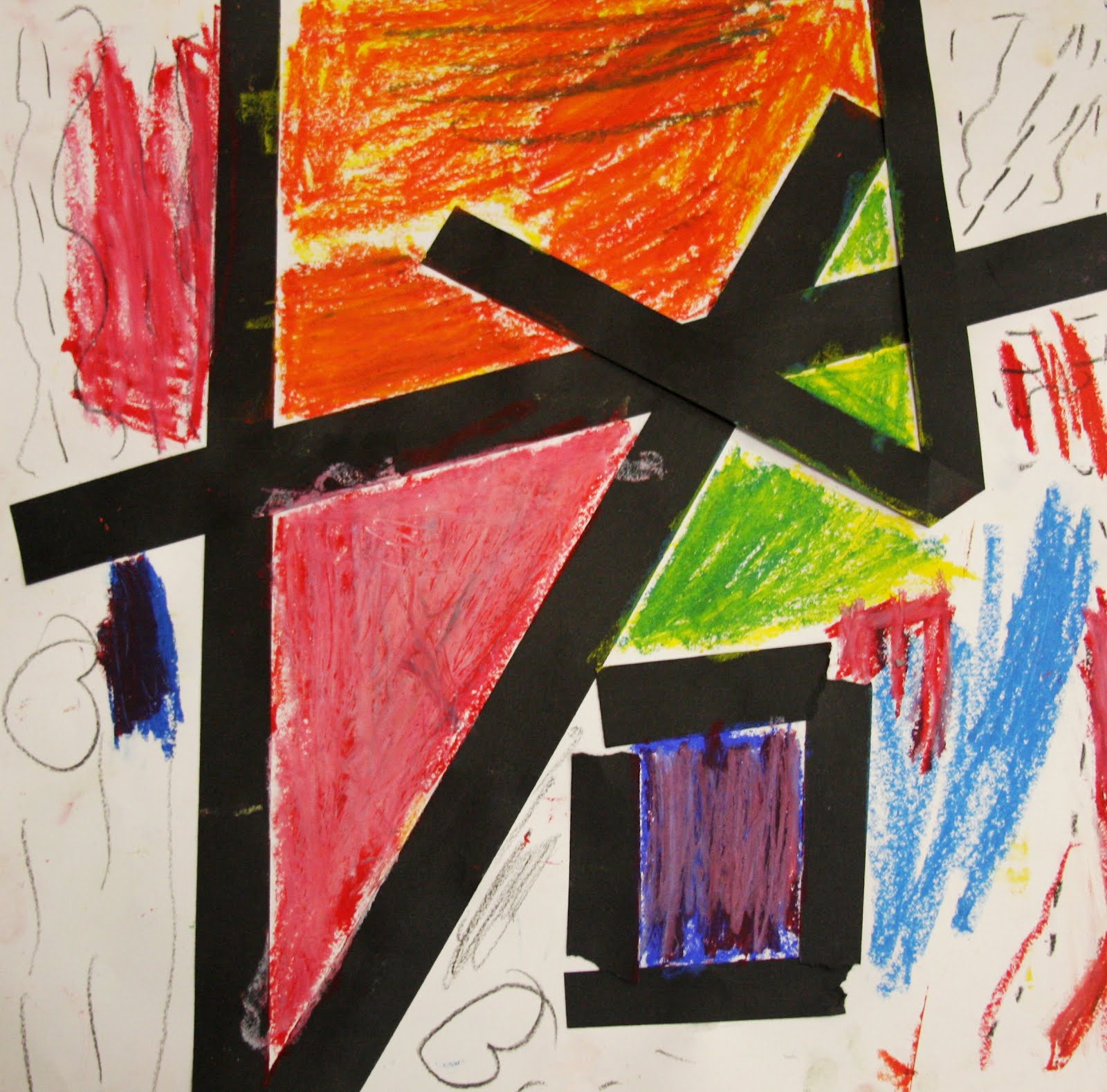
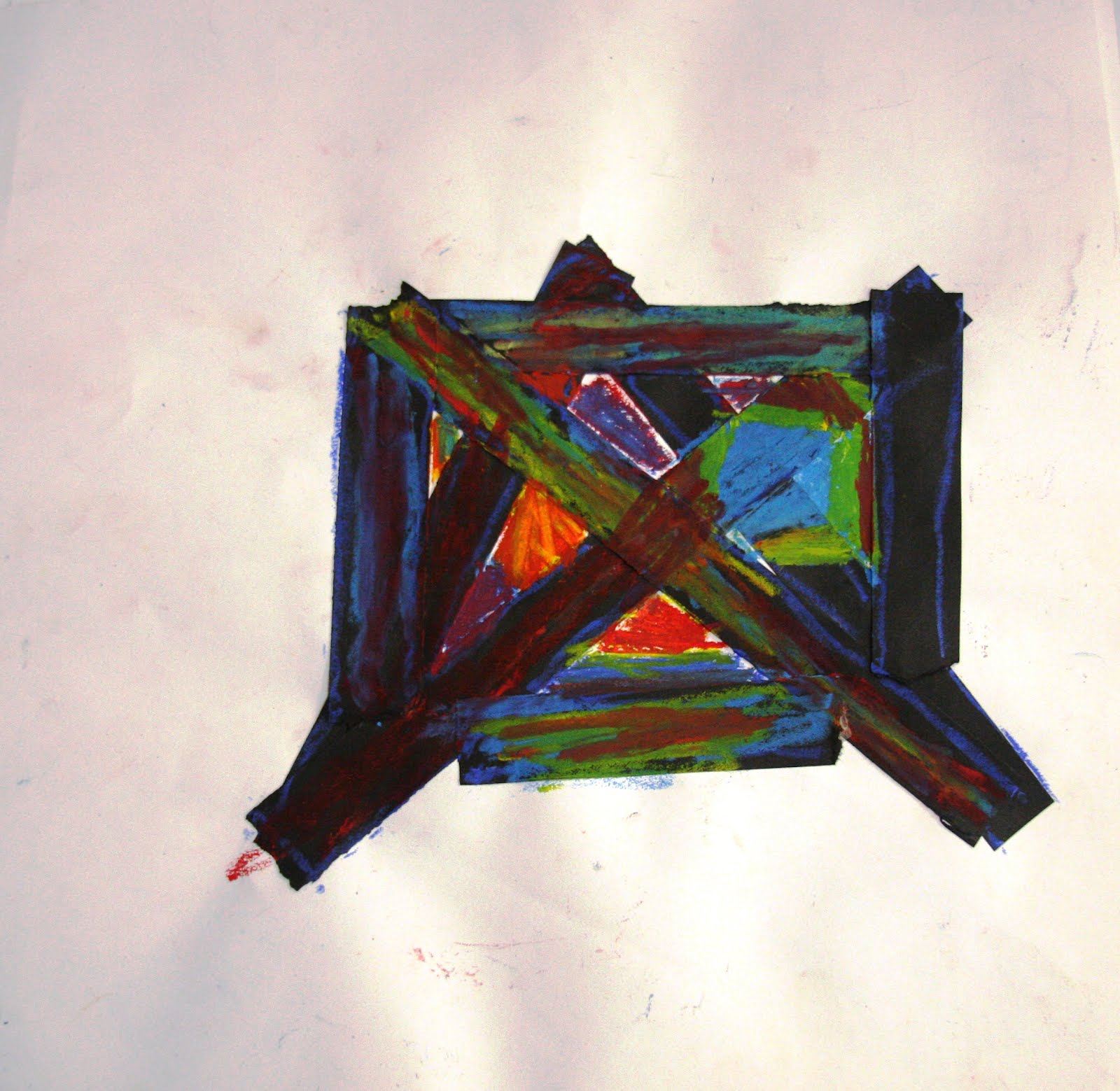
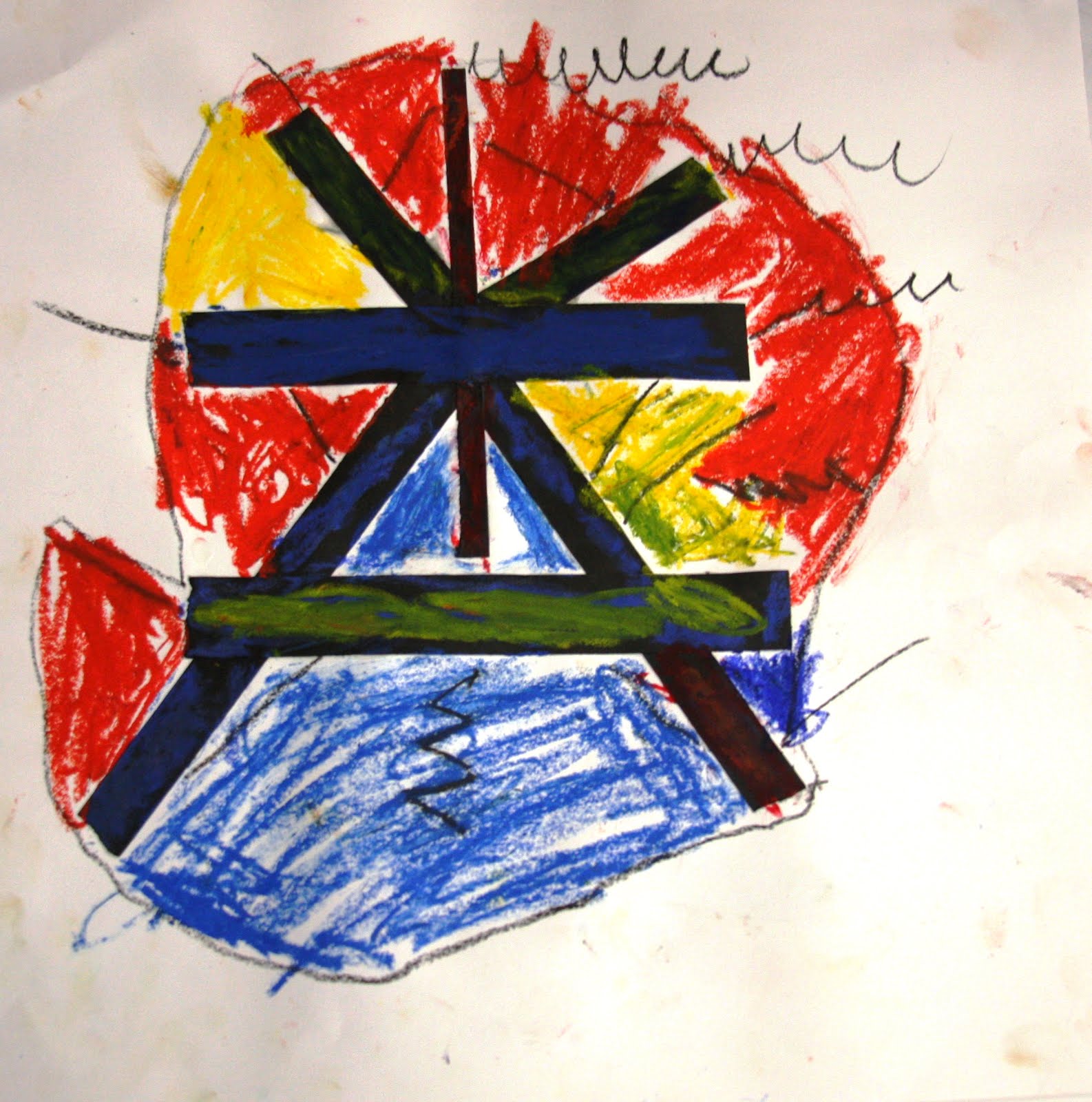
Last year during the first semester, following a lesson on exploring materials and learning the primary colors, Kinder and First Graders set to work on creating a unique square composition using line and color.  I have been changing and developing this unit on Mondrian (a common theme in the art-ed world) over the past few years, and I was especially excited by the results last year.

Instead of having the students create a Mondrian-esque study, I chose to allow for as many different solutions as possible within the perimeters of our materials.  We spent a short time talking about his work, and mainly talked about the key elements of the compositions.  I wanted the students to use similar elements as a starting point, but really take them in their own direction.

 For their first lesson, students were given black paper lines in various widths which they could rip into smaller pieces or use whole, arrange and glue in any configuration. For the second lesson, they were given oil pastels in a variety of shades of red, yellow and blue, which they could choose to mix or leave pure.  Because of the diversity of the final works, I thought it would be interesting to arrange samples here in thematic groups. Enjoy!


Some students chose to create a completely primary-colored composition, a pallet similar to that used by Mondrian.  The primary colors are so striking when used side-by-side, aren't they?


Other students chose to mix all of their colors, and filled their compositions with secondary colors and neutral tones. There was a lot of experimentation and discovery as students found out through trial and error what exact color each combination of primaries made. For example, a light blue and red make a soft lavender, while a dark blue and a red make a deep violet!


Some students used the lines to construct recognizable objects or figures - such as a playful group of monsters, a monster truck, and a house.


Others organized meticulous vertical and horizontal grids, also reminiscent of the many squares and rectangles in Mondrian's work.


There were also artists who chose to organize their lines side by side instead of having them intersect.


These radial designs popped up in many classes - comprised of diagonal, horizontal and vertical lines converging at one point, positioned in a central spot on the page.  These compositions had a strong sense of balance and symmetry.


The construction of large,  eye-catching triangles was another recurring theme.  Don't you love the blending of oranges in the work on the right?


I found these "clusters" to be especially interesting. Though constructed of straight lines and some sharp angles, the overall effect feels organic, natural, even figurative!


These colorful, busy compositions are festive and full of movement - like confetti flying through the air!

There were so many different ideas, approaches, and final results.  The students had such a great time exploring line and discovering new colors while making compositions that really reflected each student's unique vision!